

Dakar Rally 2026 — What Dakar Has Taught Us So Far
- Nayd4x4racing
- Jan 6
- 2 min read

A Union 4x4 perspective: machines, mistakes, and survival
The Dakar Rally is never just about who is fastest. From the first stages of the 2026 edition, the race has once again proven to be the ultimate real-world stress test for off-road machines, recovery gear, navigation skills, and human decision-making. Looking at the rally so far through a Union 4x4 lens, the lessons are clear — Dakar exposes weaknesses brutally and rewards preparation mercilessly.
Motorcycles: Lightweight, Fragile, Relentless

On two wheels, Dakar is survival mode from day one. Riders like Toby Price and Kevin Benavides have shown why experience matters more than aggression. Opening stages forced riders to “open” navigation — a nightmare scenario where the leader loses time simply by being first.
From a gear perspective, this category highlights:
Extreme suspension fatigue
Cooling and clutch stress in deep sand
The importance of energy management, not just speed
Crashes and mechanical DNFs have already removed strong names. Dakar on bikes isn’t about hero moments — it’s about staying upright and focused when exhaustion peaks.
Cars (Ultimate): Power Is Useless Without Reliability
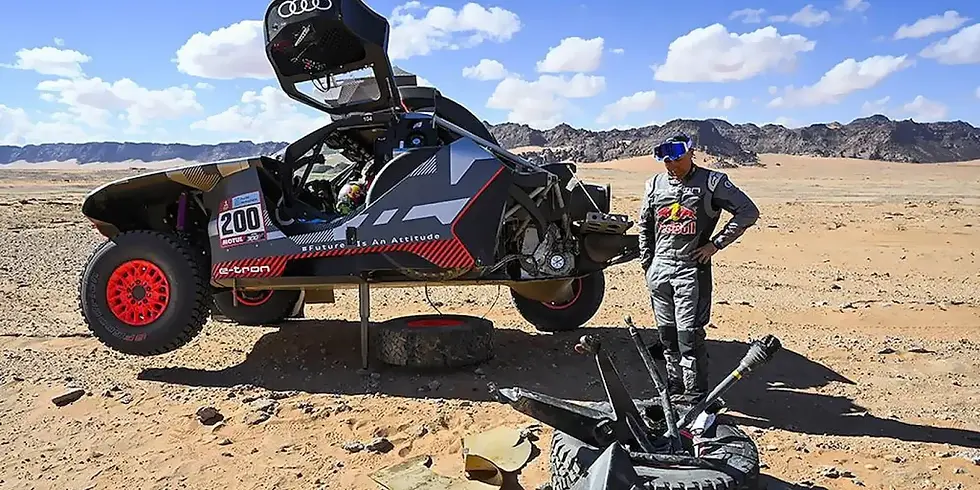
The car category has been a rolling laboratory of modern off-road engineering. Legends like Carlos Sainz, Nasser Al-Attiyah, and Sébastien Loeb have all faced Dakar’s core truth: no amount of speed saves you from a small mistake.
What Dakar has punished so far:
Suspension failures from repeated dune impacts
Tire strategy errors leading to punctures
Navigation lapses costing 10–20 minutes instantly
Hybrid and electric platforms are fast, but Dakar continues to question long-term reliability under heat, sand, and vibration. The takeaway? A perfectly tuned car still needs conservative driving and flawless prep.
Challenger (T3): Precision Over Brute Force
T3 cars are light, fast, and incredibly demanding on setup. This category has shown that:
Poor shock tuning quickly destroys pace
Missed waypoints are devastating due to close time gaps
Clean lines through dunes matter more than power
Young drivers have impressed, but Dakar experience is still the ultimate advantage. This class is where future Dakar winners are being forged — and broken.
SSV (T4): Where Preparation Matters Most
The SSV category is pure endurance. Limited power, long stages, and brutal terrain mean:
Overheating is a constant threat
CVT systems are under extreme stress
Nighttime bivouac repairs decide survival
Drivers who treated their machines gently are now reaping rewards. Dakar proves that “cheap entry” does not mean “easy race.”
Trucks: When Recovery Gear Becomes the Star
Trucks remain the most visually impressive — and mechanically vulnerable. Deep sand has already swallowed multi-ton machines, turning recoveries into full-scale operations.
Key lessons:
Weight management is everything
Winches, recovery straps, and teamwork are not optional
One bad dune decision can end the rally
In this category, Dakar isn’t a race — it’s controlled damage limitation.
The Union 4x4 Takeaway

From Dakar so far, the message is brutally simple:
Reliability beats horsepower
Navigation beats bravery
Preparation beats improvisation
Every broken suspension arm, every night repair, every recovery tells the same story: Dakar is the ultimate off-road proving ground. What survives here is what truly works.
As the rally continues, fatigue will increase, margins will shrink, and mistakes will cost more than ever. If history has taught us anything, it’s this: Dakar never decides its winners early.
And that’s exactly why it matters.


Comments